

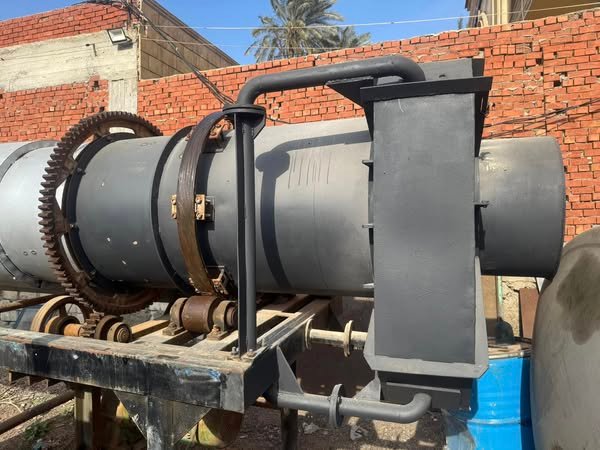
Semi-refining oil lines
Alexandria Engineering Industries offers specialized semi-refining oil lines that combine basic oil purification with dual-stage filtration—including mechanical filtration followed by adsorptive filtration using natural media such as cork granules or earth-based absorbents (e.g., Fuller’s earth, activated clay, or diatomaceous earth).
These systems are designed for cost-effective, small-to-medium scale processing of used cooking oil, crude vegetable oils, or lightly contaminated mineral oils, where deep chemical refining is unnecessary—but improved clarity, color, and stability are required.
The use of cork or soil-based filtration media provides an economical and effective method to remove fine particles, soaps, oxidation by-products, trace water, and polar contaminants—enhancing oil quality without complex chemical treatment.
Key Features:
1. Pre-Filtration Stage
- Coarse and fine mechanical filters (e.g., 100–25 microns) to remove large debris, food particles, or metal fines.
- Optional heating (60–90°C) to reduce viscosity and improve flow.
2. Adsorptive Filtration Stage
-
Cork Filtration:
- Natural cork granules act as a porous, inert filter medium.
- Effective for trapping fine solids and absorbing minor moisture.
- Reusable after cleaning; eco-friendly and low-cost.
-
Earth-Based Filtration (e.g., Fuller’s Earth or Activated Clay):
- Highly porous natural minerals with strong adsorption capacity.
- Removes pigments, residual soaps, free fatty acids, oxidation products, and trace metals.
- Typically used in pressure leaf filters, plate-and-frame filter presses, or column filters.
- Spent earth can be regenerated (in advanced setups) or disposed of safely.
3. Integrated Design
- Compact, skid-mounted units for easy installation.
- Manual or semi-automatic operation (valve sequencing, pressure monitoring).
- Constructed from food-grade stainless steel (for edible oils) or coated carbon steel (for industrial oils).
4. Applications-Specific Tuning
- For used cooking oil: Focus on removing food residues, water, and dark pigments.
- For crude plant oils: Clarification and stabilization before storage or biodiesel conversion.
- For light mineral oils: Polishing to extend service life in machinery.