

Biodiesel production lines from crude vegetable
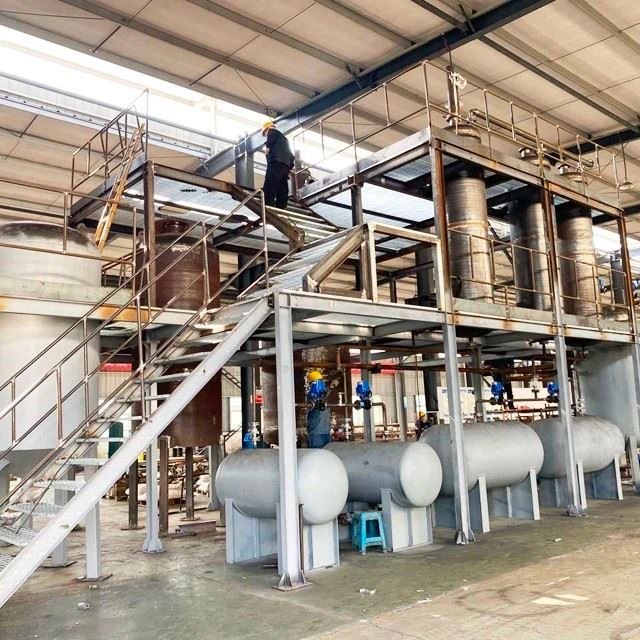
Alexandria Engineering Industries designs and manufactures fully integrated, industrial-scale biodiesel production lines capable of converting low-cost, high-acid feedstocks—such as crude vegetable oils (e.g., soybean, palm, jatropha, waste cooking oil) and animal fats (tallow, lard, poultry fat)—into high-quality FAME (Fatty Acid Methyl Ester) biodiesel that meets international standards (EN 14214, ASTM D6751).
Our systems are engineered to handle high Free Fatty Acid (FFA) content (up to 20% or more) through a two-stage refining process: acid esterification followed by base-catalyzed transesterification—ensuring maximum yield, purity, and compliance.
Key Process Stages
1. Feedstock Pre-Treatment
- Filtration & Drying: Removes solids, water, and impurities from crude oil/fat.
- Degumming (optional): For oils high in phospholipids.
- Heating & Mixing: Prepares feedstock for reaction.
2. Acid Esterification (for high-FFA feedstocks)
- Converts free fatty acids into biodiesel using methanol + acid catalyst (e.g., H₂SO₄).
- Reduces FFA to < 2%, enabling efficient base-catalyzed reaction.
3. Base-Catalyzed Transesterification
- Main reaction: triglycerides + methanol + NaOH/KOH → biodiesel + glycerol.
- Continuous or batch reactor options with precise temperature and mixing control.
4. Phase Separation
- Gravity or centrifugal separation of biodiesel (upper phase) from crude glycerol (lower phase).
5. Biodiesel Washing & Purification
- Water washing or dry washing (using ion-exchange resins or magnesium silicate) to remove residual catalyst, soap, and methanol.
- Optional vacuum distillation for ultra-pure biodiesel (for sensitive engines or export).
6. Methanol Recovery
- Distillation unit recovers and recycles excess methanol (>95% recovery), reducing costs and environmental impact.
7. Glycerol By-Product Treatment
- Crude glycerol is neutralized, concentrated, and prepared for sale or further refining.